
Course Details
This BA (Hons) Fashion Management degree awarded by London Metropolitan University is designed to enhance your fashion and business skills to fast-track progression up the career ladder in the business environment of the global fashion industry.
New start dates are TBC. To register interest please contact us.
Level
UndergraduateQualification
Honours Degree| Course | Delivery Mode | Start Date | Duration | |
|---|---|---|---|---|
| BA (Hons) Fashion Management |
Blended Learning
|
TBC | 3 years | |
| BA (Hons) Fashion Management |
In-person Weekdays
|
TBC | 3 years |
Overview
What will I study during this BA (Hons) Fashion Management course?
This course prepares graduates to secure employment in the dynamic and ever-changing global fashion retail sector.
The course content covers a broad range of fashion modules including fashion trends and consumer behaviour, fashion marketing, garment technology, visual merchandising and styling and business ethics, sustainability and CSR in fashion.
Further details on all of the modules are available below.
-
Study Skills for Success in Higher Education (15 Credits)
Learning Outcomes of this module are:
- Demonstrate ability to evaluate and plan for development of study skills and monitor achievement.
- Reference other people’s work in a precise and systematic way.
- Demonstrate ability to source appropriate information and reference.
- Reflect on learning and personal experiences as a student to foster a professional identity.
- Use digital tools to complete and submit assessment components.
-
Culture & History of Fashion (15 Credits)
Learning Outcomes of this Module are to:
- Summarize the chronological historical development and timeline of fashion evolution from the 1900’s to present.
- Identify and analyze a range of primary and secondary sources relating to the history of fashion and textiles and situate them in cultural, economic, and political contexts.
- Articulate the relationship between fashion, culture, and power.
-
Fashion Trends & Consumer Behaviour (15 Credits)
Upon completion of the module the students will be able to:
- Define the key elements in trend forecasting, interpret trends and utilise data in product range development processes.
- Demonstrate knowledge of the major principles and techniques of gathering information about consumer behaviour.
- Apply knowledge about specific consumer behaviours and buying habits to the decision- making process of fashion buyers, merchandisers, and managers.
-
Fashion Marketing (15 Credits)
The Learning Outcomes of this module are:
- Analyse the business environment for fashion organisations, considering local and global perspectives.
- Describe and constructively critique major marketing principles and concepts.
- Design marketing strategies for organisations operating in the fashion industry drawing on major theoretical perspectives.
-
The Principles of Fashion Buying & Merchandising (15 Credits)
The Learning Outcomes of this Module are to:
- Articulate the roles and responsibilities of buyers and merchandisers in fashion industry organisations.
- Demonstrate knowledge and understanding of the buying cycle and factors influencing it.
- Identify customer profiling strategies used by fashion organisations.
-
Garment Technology (15 Credits)
The Learning Outcomes of this Module are to:
- Evaluate and apply correct textile materials, equipment and mathematics required in apparel manufacturing.
- Measure and record a variety of garments: blouses, pants, skirts, jackets, dresses, intimate apparel, and evaluate different methods used to measure garments in the industry and create garment specifications.
- Scrutinize in the context of garment design; fit and appearance, properties of materials, and cutting techniques involved in the creation of a garment
LO4. Evidence and illustrate considered reflection on appropriate industry processes and applications within their personal creative and intellectual practice
-
Managing Global Fashion Supply Chains (30 Credits)
The Learning Outcomes of this Module are to:
- Articulate the role of supply chain management in implementing the business strategy of companies.
- Identify decision phases within the supply chain management and describe the main stages in the planning and coordination processes.
- Examine commercial practices and supply chain networks strategies used by companies in the fashion industry.
- Analyse the impact of disruptive technologies and sustainability concerns on global management of supply chains.
-
Innovation and Research Methods for Fashion – 15 Credits
The Learning Outcomes of this module are to:
- Critically analyse examples of innovation in the world of fashion by drawing on theoretical perspectives and models.
- Apply innovative approaches to solving problems in the fashion industry using available models and tools.
- Demonstrate knowledge of major research methodologies and select appropriate research tools taking into account ethical issues.
-
Garment Production (15 Credits)
The Learning Outcomes of the Module are:
- Evaluate the properties and performance in textile fabrics and materials in garment construction and select the most suitable for the assembly and construction of a garment/s.
- Interpret and analyse manufacturing problems, finding solutions to solving garment engineering and wholesale production problems.
- Select appropriate sources to gain relevant information on the manufacture of garment design, designed samples and wholesale production in the fashion industry.
-
The Business of Merchandising Planning (15 Credits)
The Learning Outcomes of this Module are:
- Utilize analytical and numerical skills to plan, prepare and execute merchandise plans
- Justify the importance of lead times and the use of the critical path model in the product development process and supplier management
- Appraise the key skills required for the role of the merchandiser with a particular focus on interdepartmental and interpersonal relationships.
-
Leading & Managing Diverse Organisations (15 Credits)
The Learning Outcomes of the module are to:
- Evaluate different models and theories of leadership and relate these to ethical dilemmas of leadership within a global context in the 21st century.
- Outline the equality legislation and justify the importance of inclusive working environment for organisations within the fashion industry.
- Employ reflective learning skills to relate models of leadership, change management and ethical issues to personal learning and practice.
-
Financial Decision Making for Fashion Managers (15 Credits)
The learning outcomes are:
- Examine fundamental financial theories relevant to financial decision making and governance in the business of fashion.
- Analyse and critically evaluate retail financial information using various analytical tools to support strategic financial decision making
- Evaluate elements of risk, return and value in strategic operational financial decisions.
-
Analysis of Business and Economic Environments for the Fashion Industry (30 Credits)
The Learning Outcomes For this Module are:
- Compare various economic markets within the fashion industry and identify micro-and macro-economic factors which influence them.
- Apply the PESTLE framework to evaluate the context of firms.
- Demonstrate knowledge of contexts and aspects of business and economic environments which have impact on business practices and decision-making processes.
- Discuss the role of stakeholders in shaping business and economic environments.
-
Fashion Marketing & Consumer Insights (15 Credits)
The Learning Outcomes for this Module are:
- Design marketing research tool to gather information, analyse and evaluate insights from fashion consumers data.
- Demonstrate application of creative thinking skills to practical problems by developing an effective integrated marketing communications plan.
- Apply the key elements of the marketing system known as the marketing mix to fashion products.
-
Business Ethics, Sustainability & Corporate Social Relationship in Fashion – (15 Credits)
The Learning Outcomes of this Module are to:
- Identify and analyse the complex process of developing sustainable fashion products, the manufacturing processes involved
- Summarise and demonstrate critical awareness of business development within the context of Fashion and CSR
- Apply analytical tools to assess sustainability practices in a wide range of contexts and situations in the fashion Industry
-
Professional Practice & Development (15 Credits)
The learning outcomes of this module are to:
- Make critical connnections between learning across modules within the professional context of the fashion industry.
- Reflect constructively on their personal and professional learning and set targets for the future development of knowledge, skills and competencies.
- Produce an e-Portofolio as a tool to support personal and professional development throughout the programme and beyond.
-
Fashion Research Project (60 Credits)
The learning outcomes of this module are to:
- Formulate research questions and set clear and realistic research aims related to the areas fashion business, management, marketing, buying, or merchandising.
- Apply ethical frameworks throughout the research process.
- Draw on a wide range of sources to conduct a literature review into a specific area to describe, analyse and constructively critique theoretical perspectives and contexts relevant to the research question.
- Demonstrate competence in research skills through selection of appropriate tools for data gathering consistent with the chosen methodology.
- Draw on theory to analyse data and discuss research findings to develop credible arguments and generate appropriate conclusions/recommendations
-
Strategic Planning & Development for Fashion Business Environments – 30 Credits
The Learning Outcomes of this Module are to:
- Constructively critique and relate major strategy management theories, frameworks, concepts to delivery of strategic change in a Fashion organisation
- Evaluate current strengths and weaknesses of Fashion organisations, the external threats and opportunities and create context-specific proposals for organisation’s strategy direction
- Apply strategy tools and techniques to analyse organisations within their specific contexts
- Appraise influence of organisational culture on the strategic decision-making process
Who will I learn from?
Programme Manager

Personal Academic Tutor
Each student is assigned a personal academic tutor to support you throughout your learning journey.
They are available to offer you telephone and email support at any time. You can arrange to meet them for further one-to-one guidance at a time that is convenient to you.

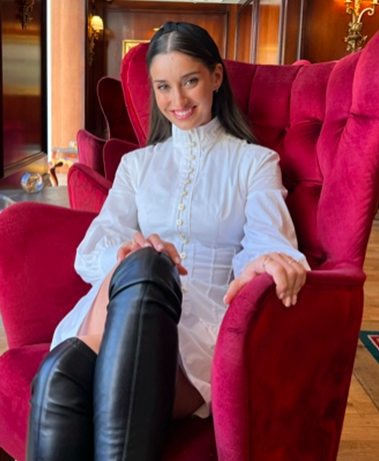
Programme Manager
Personal Academic Tutor
Each student is assigned a personal academic tutor to support you throughout your learning journey.
They are available to offer you telephone and email support at any time. You can arrange to meet them for further one-to-one guidance at a time that is convenient to you.
How will I learn?
Delivery Mode
Blended learning takes the schedule of a traditional face-to-face learning programme and restructures it to reduce the contact tuition time by introducing more online learning together with one-to-one tutor support. This mode of delivery includes contact tuition and web-based e-learning sessions. The e-learning platform is interactive including recorded sessions, webinars with weekly content and assigned tasks to themes and topics. This mode of delivery will usually include a minimum of one on-site seminar per month where attendance is required. This type of delivery is generally applied to courses with a practical skills element and allows you to work full-time and balance the requirements of a lengthy programme with home and work.
Online Learning Portal – ePortobello
During the induction seminar, we will show you how to navigate and find what you need with all of the information you need to complete this programme uploaded onto ePortobello. The content of this programme is set out in an easy-to-follow format with a combination of notes, articles, podcasts and other materials that will help you to understand the subject and complete your assessment.
Course Structure
This programme is structured for delivery over three academic years, with two semesters per academic year. There are workshops held once a month on a Saturday to cover the practical element, and webinars held throughout the semester. Webinars are recorded so you may catch up later if you are unable to attend the live session. There are pre-recorded sessions and online activities that you can review at a time convenient to you.
The Saturday workshops are held onsite, with breaks throughout the day. The evening webinars are 1-1½ long and are scheduled between 6.30pm and 9pm to accommodate students who work full-time. All sessions are recorded so you may review the session at a later stage should you be unable to log-in at the scheduled time.
The semester structure ensures you can focus on a small number of modules per term while also working on your professional practice portfolio.
The course will open with a module which will help you to develop the skills which you will need to achieve success at a degree level, such as sourcing credible information, academic writing, referencing, computer skills, basic research methods, time management and planning, emotional aspects of studying and at higher education level and student well-being. Completing the module will build a solid base for your further professional and academic development throughout the programme.
Timetable
This course is timetabled with online, onsite and pre-recorded sessions.
Real Life Learning Opportunities
Fashion Internships at Portobello Institute
At Portobello Institute, we are committed to providing our students with access to a diverse range of internship opportunities.
All of our internships offer paid positions and candidates undergo an interview process, ensuring that they are well-suited to each placement. These internships are strategically scheduled, with some available during the summer months and others offered after the academic term, providing flexibility to accommodate various schedules.
Our internship partners include renowned brands and retailers such as:
- Primark
- Brown Thomas
- Arnotts
- River Island
- New Balance
- LMVH
- Best Seller Brands
- Diesel
- Pamela Scott
These partnerships offer students the opportunity to work alongside industry professionals, gaining insights into various aspects of fashion retail, design, marketing, and management.
Our partnership with Best Seller Brands exposes students to a diverse portfolio of labels, including:
- Vera Moda
- Jack and Jones
- Selected
- Pieces
- Jigsaw
- JJXX
- LMTD
- Mamalicious
- Name It
- Object
- Only & Sons
- Y.A.S
- JDY
By participating in these internships, students not only gain practical skills and industry insights but also build valuable networks and connections that can propel their careers forward.









International Work Experience Placements
Portobello Institute is delighted to support students seeking to broaden their experience with an international work experience placement programme. This programme is optional and commences at the end of semester two. Students participating in this programme are required to take a placement for a minimum of three months and those placements are available in the UK, Sweden, Spain, Portugal and the US. Students seeking to avail of placements in the US must meet the necessary visa requirements.
Fashion Event Showcasing Irish Designers
Essential to becoming a buyer or merchandiser is developing a keen eye for trends, understanding the cycle within the fashion industry and having the opportunity to network and meet professionals in the Fashion industry. Portobello Institute has integrated key events within the fashion calendar to expose students of this course to the professionals working in the sector.
Each year, students of this programme collaborate to create a showcase event for Irish designers. The purpose of this event is to work with designers and gain some understanding of the designer showcase and buying process.
Field Trips
Portobello Institute organises trips each year to the following major fashion events in the annual calendar;
- Fashion City, Dublin
- Pure in London
- Moda in Birmingham
- Pret-a-Porter, Milan, Italy
These are usually one-day return trips and are booked with minimal cost for students. They are not included in the fees and are optional.
Guest Lecturers
Once off guest lectures are organised throughout the calendar year to give students an opportunity to gain insight into either a particular brand, the career of an established and successful professional in the fashion industry or an upcoming trend in fashion. These lecturers vary year to year but are always an interesting experience for our students.
How will I be assessed?
SMART assessments – we use a range of assessments for each module designed to support a broad range of learning styles, giving you the opportunity to excel.
The primary aim of the varying assessment styles is to support you to demonstrate your knowledge of theory and practical with assignments such as fashion business case studies, audits, development plans, presentations showcasing your practical skills.
We will encourage you to explore and support you to complete several innovative assessment formats such as presentations, posters, portfolios, podcasts, blogs, which further support development of your creative and digital skills and will give you confidence to share your knowledge with colleagues, peers, and other professionals.
Group assignments will add another dimension to your learning experience – they will help you to learn to work in teams and will provide you with benefits of peer learning.
All these methods are seeking to support you to combine theory with scenario-based learning and encourage and guiding you for future implementation into your career in the business of fashion.
Delivery Mode
You have the option to study this programme in-person on weekdays. This means 12- 16 hours of lectures per week. Portobello ensures scheduling of course timetables is considerate of students travel and accommodation arrangements, part-time working and study-life balance. The course timetable is condensed to be delivered with onsite classes 2-3 days per week over 2 semesters. Examinations are held at the end of each semester.
Practical classes are delivered in a fully equipped design studio.
Tutor Support
You can email your tutor at any stage during the module to ask a simple query and there will be scheduled opportunities to submit a draft of your assignment. Our programme management team are always available to meet you or offer you telephone and email support. For more information about our team, click here. Many of our past graduates have found it is the opportunity to ask a simple question, seek direction and submit a draft of their assessment that supported them most to successful completion.
This level of one-to-one support is unique and is a particular benefit to choosing Portobello Institute. We have invested in a team of programme managers and tutors who are experienced in the business of fashion as well as qualified and knowledgeable educators. They are available to assist you at every stage of this programme and support you to achieve your personal best.
Online Learning Portal – ePortobello
During the induction seminar, we will show you how to navigate and find what you need with all of the information you need to complete this programme uploaded on to ePortobello. The content of this programme is set out in an easy to follow format with a combination of notes, articles, podcasts and other materials that will help you to understand the subject and complete your assessments.
Course Structure
This course is delivered over three academic years. During your first year you will complete the core modules which will introduce you to this field of study and provide you with essential skills that will aid your study for the course of your degree.
In second year, you will complete a total of four modules each semester, with one year long core module which runs for the duration of both semesters.
In third year, the core modules include your final year dissertation project in the area of fashion business and your work placement.
Real Life Learning Opportunities
Fashion Internships at Portobello Institute
At Portobello Institute, we are committed to providing our students with access to a diverse range of internship opportunities.
All of our internships offer paid positions and candidates undergo an interview process, ensuring that they are well-suited to each placement. These internships are strategically scheduled, with some available during the summer months and others offered after the academic term, providing flexibility to accommodate various schedules.
Our internship partners include renowned brands and retailers such as:
- Primark
- Brown Thomas
- Arnotts
- River Island
- New Balance
- LMVH
- Best Seller Brands
- Diesel
- Pamela Scott
These partnerships offer students the opportunity to work alongside industry professionals, gaining insights into various aspects of fashion retail, design, marketing, and management.
Our partnership with Best Seller Brands exposes students to a diverse portfolio of labels, including:
- Vera Moda
- Jack and Jones
- Selected
- Pieces
- Jigsaw
- JJXX
- LMTD
- Mamalicious
- Name It
- Object
- Only & Sons
- Y.A.S
- JDY
By participating in these internships, students not only gain practical skills and industry insights but also build valuable networks and connections that can propel their careers forward.
International Work Experience Placements
Portobello Institute is delighted to support students seeking to broaden their experience with an international work experience placement programme. Students participating on this programme are required to take a placement for a minimum of 3 months and those placements are available in the UK, Sweden, Spain, Portugal and the US. Students seeking to avail of placements in the US must meet the necessary visa requirements.
Fashion Event Showcasing Irish Designers
Essential to becoming a fashion manager is developing a keen eye for trends, understanding the cycle within the fashion industry and having the opportunity to network and meet professionals in the fashion industry. Portobello Institute has integrated a number of key events within the fashion calendar to expose students of this course to the professionals working in the sector.
Each year, students of this programme collaborate together to create a showcase event for Irish designers. The purpose of this event is to give students the opportunity to work with designers and gain some understanding of the designer showcase and buying process.
Field Trips
Portobello Institute organises trips each year to the following major fashion events in the annual calendar;
- Fashion City, Dublin
- Pure in London
- Moda in Birmingham
- Pret-a-Porter, Milan, Italy
These are usually one day return trips and are booked with minimal cost for students. They are not included in the fees and are optional.
Guest Lecturers
Once off guest lectures are organised throughout the calendar year to give students an opportunity to gain insight into either a particular brand, the career of an established and successful professional in the fashion industry or an upcoming trend in fashion. These lecturers vary year to year but are always an interesting experience for our students.
How will I be assessed?
SMART assessments – we use a range of assessments for each module designed to support a broad range of learning styles, giving you the opportunity to excel.
The primary aim of the varying assessment styles is to support you to demonstrate your knowledge of theory and practical with assignments such as fashion business case studies, audits, development plans, presentations showcasing your practical skills.
We will encourage you to explore and support you to complete several innovative assessment formats such as presentations, posters, portfolios, podcasts, blogs, which further support development of your creative and digital skills and will give you confidence to share your knowledge with colleagues, peers, and other professionals.
Group assignments will add another dimension to your learning experience – they will help you to learn to work in teams and will provide you with benefits of peer learning.
All these methods are seeking to support you to combine theory with scenario-based learning and encourage and guiding you for future implementation into your career in the business of fashion.
Downloads
| Course | Delivery Mode | |
|---|---|---|
| BA (Hons) Fashion Management |
In-person Weekdays
|
 |
Career prospects
This degree is for people with a flair and interest in the fashion industry along with a desire to develop business and management skills. These skills are transferable to a wide range of business sectors.
Job opportunities range from fashion marketing, visual media and display, retail fashion management, supply chain management, leadership and management, business analysis, communication and organisational skills, brand management and global trading.
Related Courses
BA (Hons) Fashion Buying & Merchandising
This BA (Hons) Fashion Buying and Merchandising degree awarded by London Metropolitan University qualifies you to work within the business environment of the global fashion industry, launching your career as a fashion buyer and merchandiser.
Speak to an expert
Choosing a course that will lead you to your career of choice is a significant decision. Understanding the delivery modes, supports available, career opportunities and further study options are all key considerations when making your choice. Our course adviser team are experts in the courses Portobello offers, the employment prospects and possible progression routes to Masters programmes – they will guide you through the detail and support you with any queries you may have.
It is important you make the right choice for you and choose the Institute and course that will best suit your needs.
Your Consultant

Sarah Coyne
Education is a journey and the destination is a career that you love. I support the department that helps you to plan your journey so you can find the path that’s right for you. As I am often the first point of contact for many prospective students, I am excited to introduce students to the Portobello Institute experience. I enjoy learning about students’ ideas, goals, and passions, and this job allows me to do so.
How do I apply?
Entry is by direct application to Portobello Institute
With a Leaving Certificate
Leaving Certificate requirements – Minimum of grade C or O6 in English and Maths (Foundation Maths accepted) with a pass in 4 other subjects.
Sitting the Leaving Certificate in 2024
Students may apply and be granted a “Conditional Offer” before completing the Leaving Certificate.
Step 1 – Submit application
Step 2 – Review of application and confirmation of eligibility criteria and entry requirements
Step 3 – Conditional Offer issued based on successful achievement of LC requirements
Step 4 – Confirm acceptance of a place and pay deposit as detailed
Places cannot be held open for applicants awaiting leaving certificate results, however, should a student accept a place and then choose not to progress with this course having received a CAO offer, a refund of 75% of fees paid will be made. Refunds must be requested in writing within 48 hours after the first-round offers have been made. This will only be accepted by emailing [email protected]. Evidence of CAO offer acceptance must be provided in order to apply for a refund.
Applicants who have previously completed the Leaving Certificate;
Minimum of grade C or O6 in English and Maths with a pass in 4 other subjects.
Without a Leaving Certificate
Students are accepted onto this programme without a leaving certificate however applicants must meet one of the following criteria;
- QQI level 5 major award preferably but not essentially in retail, design, business or finance.
- Alternative retail, business, design or finance qualification.
- An undergraduate degree in another subject.
- Experiential Learning in retail, business, finance or a related field with a QQI Level 5 or equivalent award in any subject.
- Mature entry at 21 years. Mature student applications are reviewed on a case-by-case basis and entry is via interview.
Application Process
Step 1
Complete the online application form.
Step 2
Applicant’s application will be reviewed by the Portobello enrolment team.
Step 3
Applicants will be contacted by the Portobello enrolment team to confirm their place on the course or for more information. Depending on your application, you may be required to email copies of transcripts of previous qualifications, leaving certificate results or evidence of work experience.
Confirming Eligibility Criteria
We also seek to understand that applicants have a genuine interest in working within the fashion industry, they understand the sector, and the requirements of the programme. Meeting each applicant offers both the student and our team the opportunity to explore the programme and that this programme and Portobello Institute is the right career choice. This meeting happens (online) at a time convenient to applicants and is with a member of our programme management or advisory team.
Places on this programme are limited and early application is advised. Following our confirmation of eligibility and an offer of a place to you, we reserve a place for you for 14 days. Thereafter, unconfirmed offers are released and your place may be offered to another applicant.
Fees & Payment Options
Fees
Course Price
Year 1 base fee
Exam Body Reg. Fee
Overall Course Price
Total amount due
Easy Payment Plan
Payment Option 1
33% deposit payment (€1,654.95), followed by 8 scheduled payments on the first of each month, commencing the 1st of the month after the start date of the course. Includes one off instalment fee of €365.
- €420.01 due in month 1
- €420.01 due in month 2
- €420.01 due in month 3
- €420.01 due in month 4
- €420.01 due in month 5
- €420.01 due in month 6
- €420.01 due in month 7
- €420.01 due in month 8
Fees
Course Price
Year 1 base fee
Exam Body Reg. Fee
Overall Course Price
Total amount due
Easy Payment Plan
Payment Option 1
40% deposit payment (€2,410.00), followed by 6 scheduled payments on the first of each month, commencing the 1st of the month after the start date of the course. Includes one off instalment fee of €295.
- €602.50 due in month 1
- €602.50 due in month 2
- €602.50 due in month 3
- €602.50 due in month 4
- €602.50 due in month 5
- €602.50 due in month 6
Payment Option 2
40% deposit payment (€2,292.00) due on application of your course. Final balance (€3,438.00) due before the course start date.
Available Courses
| Course | Delivery Mode | Start Date | Duration | Fees Per Year |
|---|---|---|---|---|
| BA (Hons) Fashion Management |
Blended Learning
|
TBC | 3 years | €4,650.00 |
| BA (Hons) Fashion Management |
In-person Weekdays
|
TBC | 3 years | €5,730.00 |